You walked out of the salon expecting sun-kissed dimension—and got brassy, patchy strands instead. Or maybe you skipped the appointment altogether, grabbed a drugstore kit, and ended up with orange streaks that scream “DIY disaster.” Either way, your hair’s screaming for rescue. The fix? Real professional hair highlights—done right, by someone who knows pigment, porosity, and timing like their own heartbeat.
Why Most Highlight Attempts Fail (Even at High-End Salons)
It’s not just about bleach. It never was. The core issue? Most colorists treat highlights as a surface-level service—slap on lightener, rinse, done. But hair isn’t canvas. It’s biology. And if your stylist ignores your natural base tone, undertone, or previous chemical history, you’re gambling with breakage and brassiness. And guess what? Many do. They chase speed over science.
Think about it: two clients walk in with “level 6 brown” hair. One has cool ash undertones; the other, warm golden. Same formula? Disaster waiting to happen.
The Step-by-Step Process Behind Flawless Professional Hair Highlights
Pre-Service Diagnosis: Beyond the Consultation Form
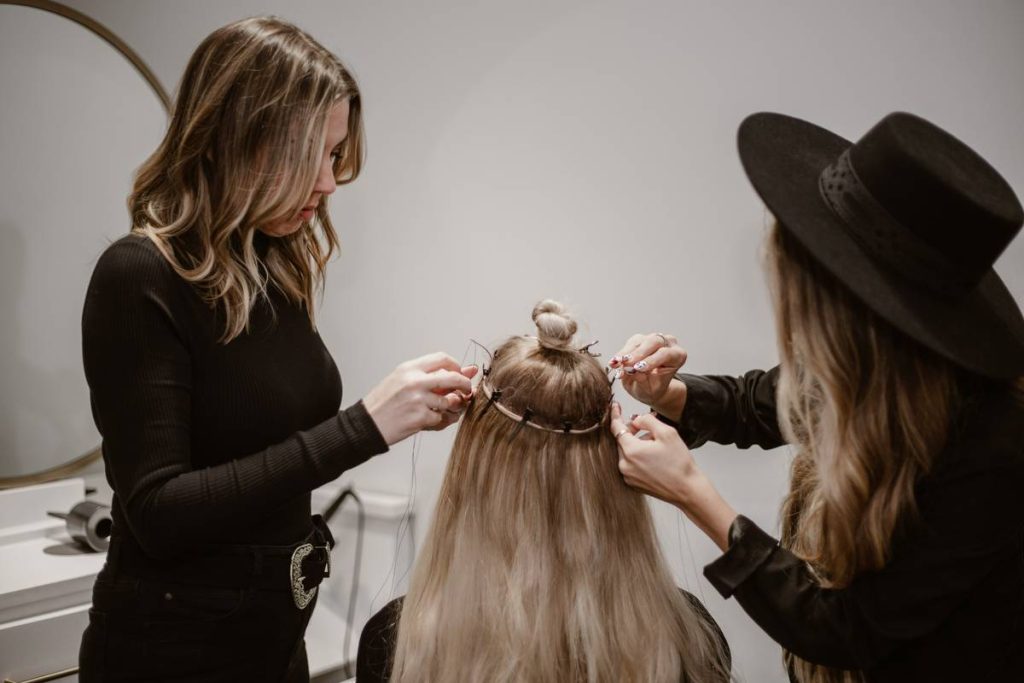
A pro doesn’t just glance at your hair. They stretch a strand. They check elasticity near the roots versus ends. They ask when you last colored, straightened, or swam in chlorine-heavy pools. This determines whether they’ll use foil, balayage, or babylights—and what developer volume to pair with which lightener.
Custom Formulation: Not All Lighteners Are Equal
Different brands lift differently. Some swell the cuticle aggressively; others work slowly but preserve integrity. A master chooses based on your goal: subtle sunlights? Go low-volume peroxide with a creamy lightener. Full-on platinum ribbons? Maybe a bond-building powder + 20 vol—but only if your hair can handle it.
Placement Precision: Where You Put It Matters More Than How Light
Highlights frame the face—not blanket the head. Strategic placement around the perimeter, under layers, and at varying widths creates movement. Random streaks? That’s costume hair. Real dimension mimics how sun actually hits strands.

| Highlight Method | Best For | Avg. Cost (USD) | Maintenance Frequency |
|---|---|---|---|
| Foil Highlights | Maximum lift, uniform strands, gray coverage | $120–$250 | Every 8–10 weeks |
| Balayage | Soft grow-out, natural sun-kissed effect | $150–$300 | Every 12–16 weeks |
| Babylights | Ultra-fine, multidimensional shimmer | $180–$350 | Every 10–12 weeks |
| Ombré | Dramatic root-to-tip gradient | $100–$220 | Every 10–14 weeks |
The Industry Secret: The Rinse Is Where Magic Happens
Here’s what no salon brochure tells you: the toner application during rinse makes or breaks your result. Most clients think highlights end when bleach is washed out. Wrong. That’s just act one. The real artistry? Neutralizing unwanted warmth with custom violet, blue, or beige toners—applied not uniformly, but selectively. A dab here cancels brass; a whisper there adds pearl. Skip this, and even perfectly lifted hair looks cheap. And yes—some salons skip it to save time. Don’t accept that.
Frequently Asked Questions
How long do professional hair highlights last?
Visually, 8–12 weeks. But integrity lasts longer if you avoid sulfates, heat, and hard water. Use purple shampoo sparingly—overuse dries hair.
Can I get highlights if my hair is already damaged?
Maybe—but not full-lift foils. A skilled colorist might suggest gloss+lowlight combo or protein pre-treatment first. Never force lift on compromised strands.
Are professional hair highlights worth the cost?
If you value longevity, health, and natural-looking dimension—yes. Cheap highlights cost more long-term in repairs, trims, and emotional distress.